
Danny Glover’s name is synonymous with historical flicks. Whether it’s ‘The Color Purple,’ ‘Beloved’ or ‘Silverado,’ the 62-year-old actor has had his fair share of staring in movies with a historical slant.
A native of San Francisco, Glover first garnered attention playing a farmhand in the 1984 Oscar nominated drama ‘Places in the Heart.’ With movie credits that range from the ‘Lethal Weapon’ franchise to the critical acclaimed musical ‘Dreamgirls,’ Glover is considered to be one of the greatest actors of his generation.
The co-founder of Louverture Films, the actor who has gained numerous accolades for his community activism and philanthropic efforts also serves as a UNICEF Ambassador and talks to Samantha Ofole-prince about his slate of new projects.
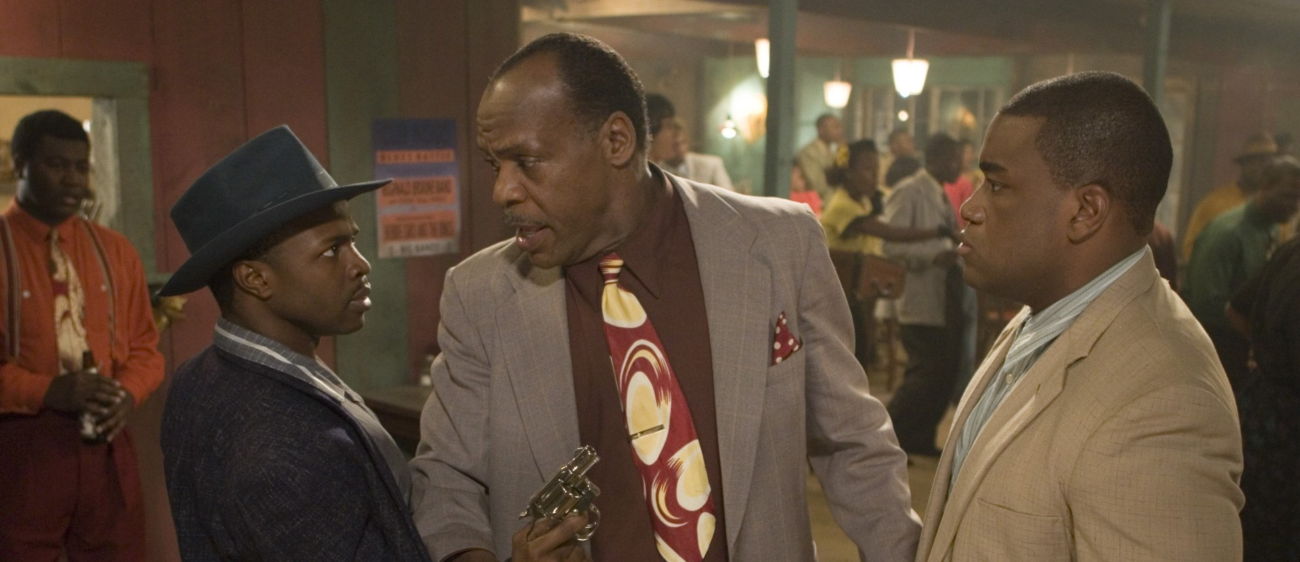
SOP: ‘Honeydripper,’ which is your latest movie project is set in ‘50s Alabama and is about a club owner who takes drastic measures to save his juke joint. Is it fair to say that one of the reasons that attracted you to this project was its historical relevance? DG: Yeah. I always believe these small stories are part of a collective phenomenon. This is a phenomenon in a sense that this man, Tyrone Purvis, lived in the South which is unchanged from the period of reconstruction. He was born into it and it remains unchanged. My parents are from the South and so for me to be a part of this film and be able to call upon all that memory in some sort of way was wonderful. It’s amazing to understand our lives and history. This man, my character, sees himself as an entrepreneur – an independent businessman but what does that mean in 1950 in Alabama? One of the most horrific moments in American history was the period after World War II when so many black men came back from the war expecting the same type of respect received abroad whilst serving and were lynched and beaten in their uniforms. This is all part of American history.
SOP: Some of the other cast members in the movie describe their Southern hospitality whilst shooting in Alabama as disconcerting — citing racism and other prejudices. Were your experiences similar?
DG: I am fortunate because I am a part of all that experience. I am the first generation of my family born outside of the South. I was born in 1946 so that meant that I am child of the Civil Rights Movement. I spent a great deal of time around my grandparents in the South and they were married in 1915 and were poor rural farmers. My mother was the first to go to college and graduate from college so all that becomes a part of my historic memory.
SOP: You are the only cast member who didn’t have audition for the role and the director John Sayles claims he had you in mind when penning the script – do you think it’s because of the strong periodic pieces you have done in the past like ‘Beloved,’ ‘Color Purple’ and so on?
DG: First of all, how many 60-year-old actors are there? Not many at all. One of the beautiful things about my career is that it’s a manifestation of the movement of people. We are here because we were somebody else’s vision of a better world. Clearly my career is a part of that. Who would have thought ‘Lethal Weapon’ would become a cult film? Who would be able to say a novel of a woman who worked in the Civil Rights Movement would become a movie. I was born into the moment. I wasn’t born in 1935 but 1946 so I was born right into all these changes.
SOP: ‘Honeydripper’ is a historical flick with great cinematography which aptly captures the language and colloquiums of the rural south whilst also telling a story about the introduction of blues music. What did you take away from doing this film upon completion? DG: Every chance that I get an opportunity to reinforce what my own sense of the world and history that I have been a part is — that’s what I take away from it. Whether it’s ‘Beloved’ or ‘Silverado,’ they all reinforce cultural productions and inform and empower us to reflect on who we are. What I take away is the revalidation of work that allows us to look at ourselves and reflect on who we are and there is value in that.
SOP: With your company Louverture Films, which you set up to develop historically relevant projects you have quite a few upcoming projects including a movie called ‘Toussaint’ about the Haitian rebel staring Don Cheadle, Mos Def and Chiwetel Ejiofor?
DG: Yes, I have a project on Toussaint the Haitian revolutionary that I am going to direct. We are trying to put that together. I have a film which is going to be on Sundance which is a very special and different look at Hurricane Katrina called ‘Trouble the Water.’ There is another documentary with the Marley family on the 60th anniversary of Marley’s birth which we shot in Ethiopia with all the Marley kids.
SOP: ‘Places in the Heart’ marked your first leading onscreen role and perhaps your first historical cinematic piece where you actually picked cotton. Share some memories of that earlier part of your movie career.
DG: It was 1983 and my grandparents couldn’t figure out what I did then. When my grandmother saw ‘The Color Purple’ she said she was going to beat me and that I was raised better than that. Even though I told her it was just a movie and I was playing a role she still didn’t believe it [laughs]. She had both her legs amputated and was in a wheel chair at 98-years-old but she still threatened to beat my ass. My grandfather on the other hand teased me about that movie for a long time but I picked cotton on his farm as he grew cotton. I remember when we
went down there for the summer. I was 15-years-old and we learned that my grandfather was going to give us 25 cents a pound for cotton and my sisters and I were planning on how we were going to make all this money but picking cotton takes forever! That was some of the hardest work! They both died when I was in my 40s but they both saw my career and I was able to take care of them and they never had to leave the farm.
SOP: With over 20 years of roles in screen, stage and television, what’s been your most memorable or challenging role to date? DG: Well, ‘Places in the Heart’ stands out as something very special to me. It’s dedicated to my mother who was killed in an automobile accident the day I found out I was going to do the work. That was the most challenging for me but I always say the most important film is the film I am going to do next [laughs]. I think ‘Beloved’ was a really important film to do also.
‘Honeydripper’ releases in theatres nationwide February 1st