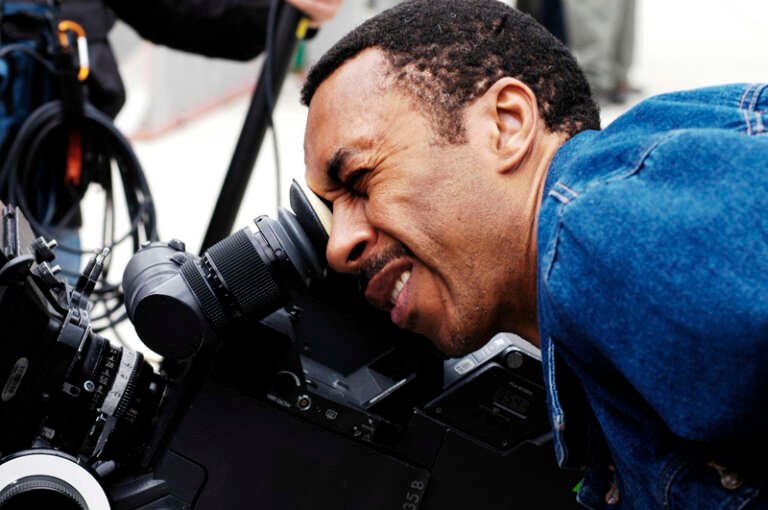

He’s the director of “Soul Patrol,” a film which focuses on the Vietnam War’s first Black special ops team.
The documentary features a clandestine, all-Black unit of long range special operations soldiers who worked deep behind enemy lines and whose story has stayed in the shadows for half a century. Harper, a Brooklyn-based director who made his debut with “As We Speak,” a film which premiered in the U.S. Documentary Competition at Sundance in 2024 has made a film which does not so much fill a gap in the historical record as expose how wide the gap was.
The project grew from a fascination that took hold early for Harper who has obsessed with Vietnam. He walked into a Barnes & Noble and found a book called “NAM,” full of photographs. What struck him most were the images of young people who looked like him, some bearing slogans of Black Power and anti-war sentiment. “Even as a young teen,” he said, he understood that “these people look like me, and there’s something really complicated going on.”
Six years ago, he read “Soul Patrol,” Ed Emmanuel’s retelling of his year-long tour in Vietnam, from 1968 to 1969. The story of the first Black special operations team, he said, “struck me as unique.” He reached out to Emmanuel, expecting a single conversation. It became a six-year experience, built on weekly phone calls and earned, year after year, through trust. Eventually Emmanuel introduced him to his tight-knit circle of Vietnam veteran friends.
“It was as if they had just walked out of the jungle to talk to me,” says Harper. “It was as though they were still 19 years old, even though they were 77.”
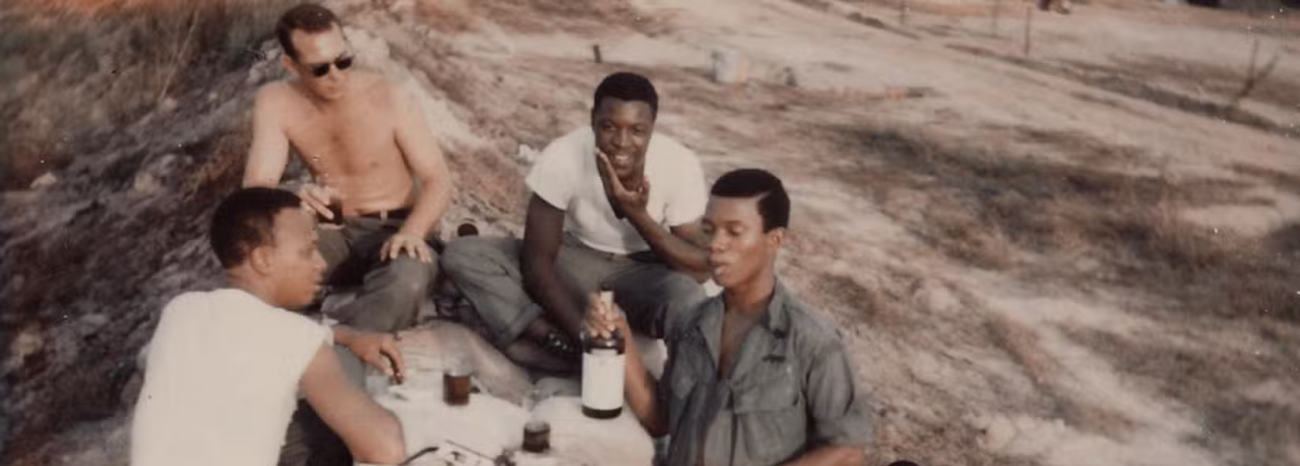
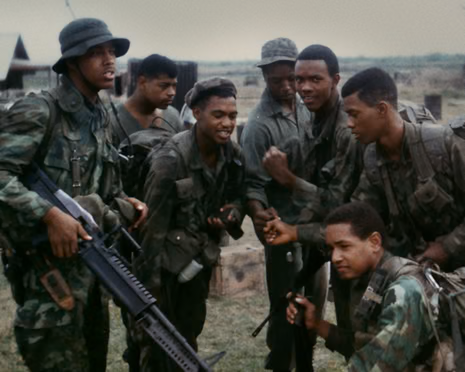
That patience shows on screen. The surviving members of this once-secretive group speak with a candor that suggests years of waiting to be asked. Their own archives do much of the work. A treasure trove of never-before-seen footage, including raw Super 8 film, along with personal photographs and audio recordings, gives the wartime sequences an immediacy that polished reenactment rarely achieves. The images are grainy, unguarded and intimate. They look like what they are, the souvenirs of young men who did not know how the story would be told, or whether it would be told at all.
The film’s smartest decision is to narrow its focus. Rather than attempt a sweeping group history, Harper zeroes in on one veteran’s journey before, during and after the war, that of Emmanuel, the film’s central figure. That choice gives “Soul Patrol” a human spine, and it lets the larger questions arrive through a single life instead of a lecture.
The present-day frame is just as effective. The film opens on the 50th anniversary of the war’s end, as the surviving members reunite in a hotel. Mr. Harper treats the setting as something stranger than a backdrop. It becomes a liminal space, neither past nor present, where memory, brotherhood and unresolved trauma occupy the same rooms. Men who once depended on one another for survival find themselves relying on one another again, this time to get through the remembering.
What gives the film its weight is the question running beneath its war stories. These men fought for freedom abroad while facing inequality at home, and the film refuses to smooth over that contradiction.
Harper sees it in the archival record itself. “There were those photos of Black soldiers, hundreds of them, walking through the jungle,” he shares. “That paradox was written right on their helmets, in the form of Black Power iconography and messages. They wanted peace, but were carrying these incredibly destructive weapons. That’s a huge contradiction. The contradiction is everywhere if you look close enough.”
The film lets the veterans sit with that contradiction, and lets the audience sit with it too. What Mr. Harper finds is that for this group of Vietnam veterans, the war still rages on. “Soul Patrol” is less a military chronicle than a reckoning, a portrait of survival and of the long cost of war on those who were sent to fight it.
For Harper, the past is not finished arriving. “Little did we know that in 2025, the names of Black veterans would be removed from our national cemeteries by the Secretary of Defense, and the Secretary of War,” he shares. “This is part of the whole backlash against Diversity, Equity and Inclusion, and a backlash against the language of how we talk about our history as Americans. We’re watching the African American experience being erased and whitewashed from the graveyards.”
In 2025, Arlington National Cemetery removed information from its website documenting the contributions of Black, Hispanic and female service members, and said it was working to restore some content while complying with administration directives.
Some wounds, the film suggests, are eased by being witnessed, and the reunion at its center plays as both a gift and a burden.
“Soul Patrol” is an important film, and a humane one. It restores a chapter of American military history to its rightful place, and it does so by trusting the men who lived it to speak for themselves.