
A new documentary from Sam Pollard follows Desmond Tutu from a segregated South Africa to the world stage.
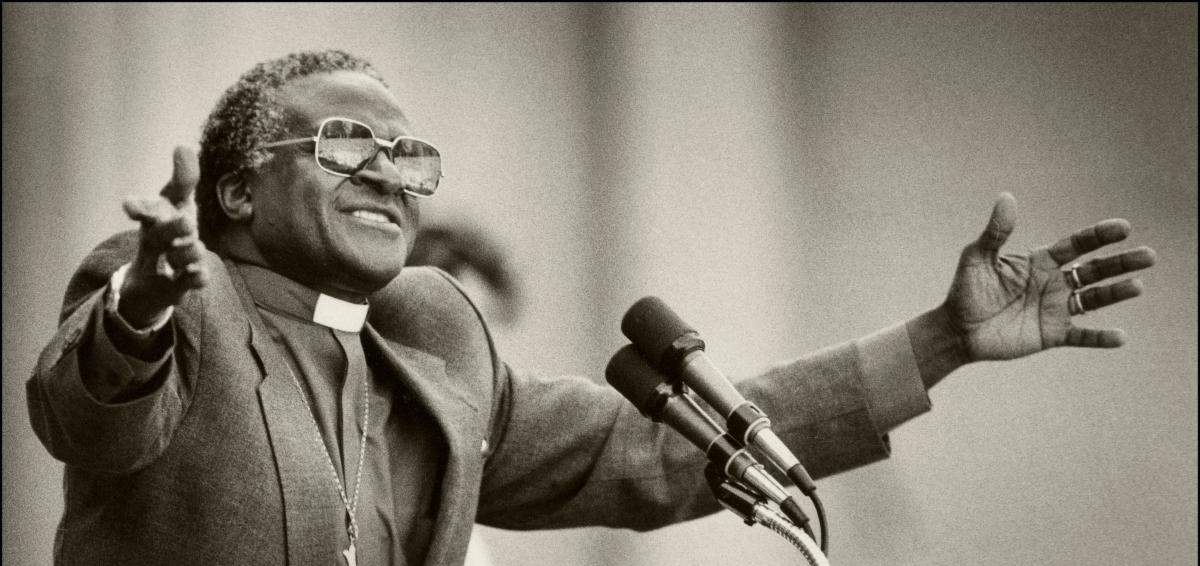
Desmond Tutu was more than an Archbishop, he was a moral compass, a fearless champion of justice and a global beacon of hope whose sermons could fill a cathedral or shake a regime. In the new documentary from Sam Pollard, the portrait that emerges is of the man behind the iconic voice.
The film traces Tutu’s rise as the voice of the oppressed through never-before-seen archival footage and first-hand accounts from people who knew him best. It follows him from a young priest in apartheid South Africa to one of the most recognizable moral figures of the 20th century. He won the Nobel Peace Prize in 1984 for his peaceful campaign against apartheid and his role as a unifying figure. In 1985 he became Bishop of Johannesburg, and in 1986 Archbishop of Cape Town, a post he held until 1996. In both roles he was the first Black African to serve.
Those titles could make the story sound like a march of milestones. Pollard’s film is more interested in the weight behind them: the funerals he presided over, the police he faced down, and the moments when a church leader became, almost by default, the spokesperson for people who had no vote and no platform.
Woven through the film is the love story of Desmond and Leah Tutu. She appears here not as a footnote to a great man’s career but as the partnership that sustained his life and work. It is a smart choice. Tutu’s public persona was joyful, even mischievous, and the film suggests that joy had a home address.
Above all, the film is about forgiveness. Tutu never wavered from the conviction that a nation could not heal without it, a belief that came to define his chairmanship of the Truth and Reconciliation Commission. The film presents forgiveness not as softness but as a discipline, and a demanding one.
I wanted Tutu’s voice to be the heartbeat of the story, to let his humanity, humor and moral conviction lead us through his world,” says Pollard.
Pollard is widely regarded as one of America’s most accomplished and influential documentary filmmakers. Over a four-decade career as a director, editor and producer, he has helped define the landscape of modern nonfiction storytelling. His films have earned Peabody Awards, Emmy Awards and an Academy Award nomination, and in 2020 the International Documentary Association presented him with its Career Achievement Award.
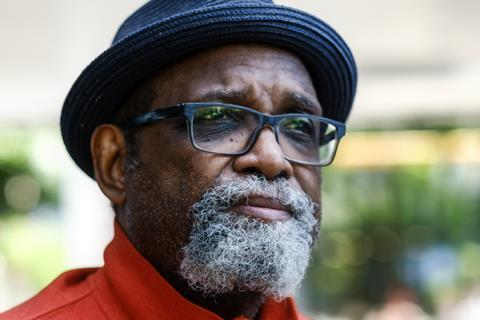
He began as an editor, and for years was best known as the collaborator behind several of Spike Lee’s films, among them “Mo’ Better Blues,” “Jungle Fever,” “Girl 6,” “Clockers” and “Bamboozled,” as well as the Oscar-nominated documentary “4 Little Girls.” As a director and producer, he has built a body of work devoted to chronicling the African American experience with nuance, rigor and emotional clarity, including “Slavery by Another Name,” “Marvin Gaye: What’s Going On” and “MLK/FBI,” which examined the government’s surveillance of Dr. Martin Luther King Jr.
His work ranges from portraits of cultural icons and political figures to investigations of institutional power and Black artistic expression and in “Tutu: Rebel With a Cause,” Pollard lets the archbishop speak for himself, and finds a love story at the center of a freedom struggle.
“As an African American filmmaker, I can’t help but view Tutu’s struggle through the lens of my own country’s history of racial oppression. The parallels between South Africa and the United States are undeniable, and yet Tutu’s journey reminds us that even in the face of systemic hatred, faith and hope can be acts of rebellion. His laughter, his playfulness and his refusal to surrender to bitterness became his most radical tools,” Pollard continues.
The film had its world premiere at the 2026 Berlin International Film Festival, where it won the Cinema for Peace Award and received a special mention for the Berlinale Documentary Award. It recently screened at the BFI London Film Festival and opens in theaters December 11.