
She’s a self-taught filmmaker whose films include the short “Lyiza” which won a prize at Carthage Film Festival in Tunisia.
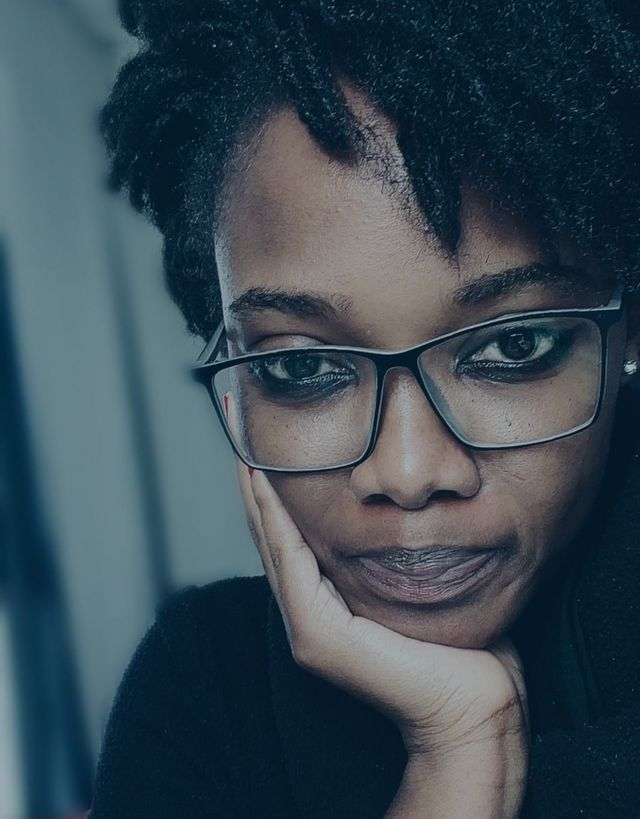
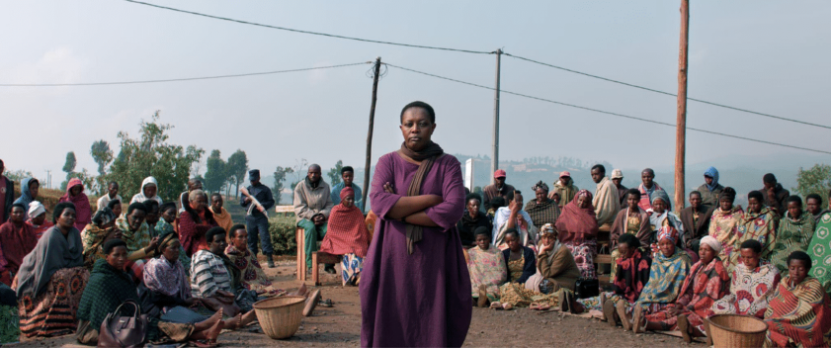
Dusabejambo’s first feature film “Ben’Imanais” follows Vénéranda, a survivor of the Rwandan Genocide of 2012 who is helping other women rebuild their lives amid their shared trauma. When she learns of her daughter Tina’s unexpected pregnancy, she is forced to confront the limits of her own convictions.
For the filmmaker, seeing this film become the first Rwandan feature film at Cannes is a huge victory.
You were seven years old in 1994, do you remember the genocide?
At seven, you perceive the world in fragments through emotions and not political analyses. My work as a director, here, is not to unearth childhood memories, but to carry the voice of my characters, with all the maturity I now have. What I have chosen to share with audiences is the universal emotion of the film, not my own past. That is where my freedom as an artist resides. At seven, I saw a world collapse; today, through my art, I am participating in rebuilding a new one.
Why did you place the film in 2012?
Situating the story in 2012 was an organic choice. Historically, this date marks the end of the Gacaca courts, a crucial phase when the country shifted from legal justice towards a more intimate reconciliation. The year 2012 gave me that perfect equilibrium and enough distance for hindsight, but enough proximity for the wounds to still be raw.
How was the Ben’Imana project born?
Ben’Imanais a film about survival. Through Vénéranda, I tell the story of a woman whose body has been a battlefield. Rape as a weapon of war leaves traces that the legal system has trouble naming or remedying, due to a lack of tangible ‘proof’. I was interested in filming that “weight,” that constant presence of the past. Everything is intertwined in this story and you manage to show how the genocide affected the country. Ben’Imana is also less a film about forgiveness than it is about an intangible generational transmission that occurs, despite parents’ desire to stay silent.
Where did you shoot the film?
We left the hum of Kigali for the heights of the hills of Kibeho. The landscape there is a living metaphor for the characters in the film. In this part of the country, the cold and the morning mist sketch out an in-betweenworld, a limbo of captivating beauty. It is a place of extraordinary evocative power, in which the landscape itself seems haunted by memory. Between the casting and this immutable setting,the script came to life in an almost supernatural harmony.
How long did this film take you to make?
Ten years. There was a tremendous amount of research and development. I also had to learn to feel, listen, and speak. This film is a Rwandan work of art in the purest sense: our crew consisted of ninety percentlocal professionals. It is this love of the project that makes the film possible, with a technicalteam and backers who were invested body and soul, despite limited means. Seeing this filmbecome the first Rwandan feature film at Cannes is a huge victory forour industry and for ourcountry
What is the translation and significance of the title Ben’Imana?
In Kinyarwanda, Ben’Imana literally means “God’s people ” or ” The Lucky Ones.” It’s a term weuse to describe ourselves in Rwanda, referring to our oneness; we share one single language, a single culture. The journey of making this film and the journey of reconciliation was a quest for identity, a going back to the source, that oneness that used to be before everything fell apart, that’s why I chose the title Ben’Imana. Ben’Imanais also the fruit of a powerful encounter between two African women, my two producers, Gabonese Samantha Biffot and Rwandan Marie Epiphanie Uwayezu. Together, we wanted to cross borders and demonstrate that it is possible to work with international partners while conserving strong African leadership. It is proof that as women and producers from the continent, we can exist fully and affirm our creativity.
The film stars Clémentine U. Nyirinkindi, Kesia Kelly Nishimwe, Arivere Kagoyire, Isabelle Kabano, Antoinette Uwamahoro, Léocadie Uwabeza and has been selected as Rwanda’s official entry for Best International Feature Film at the 99th Academy Awards.