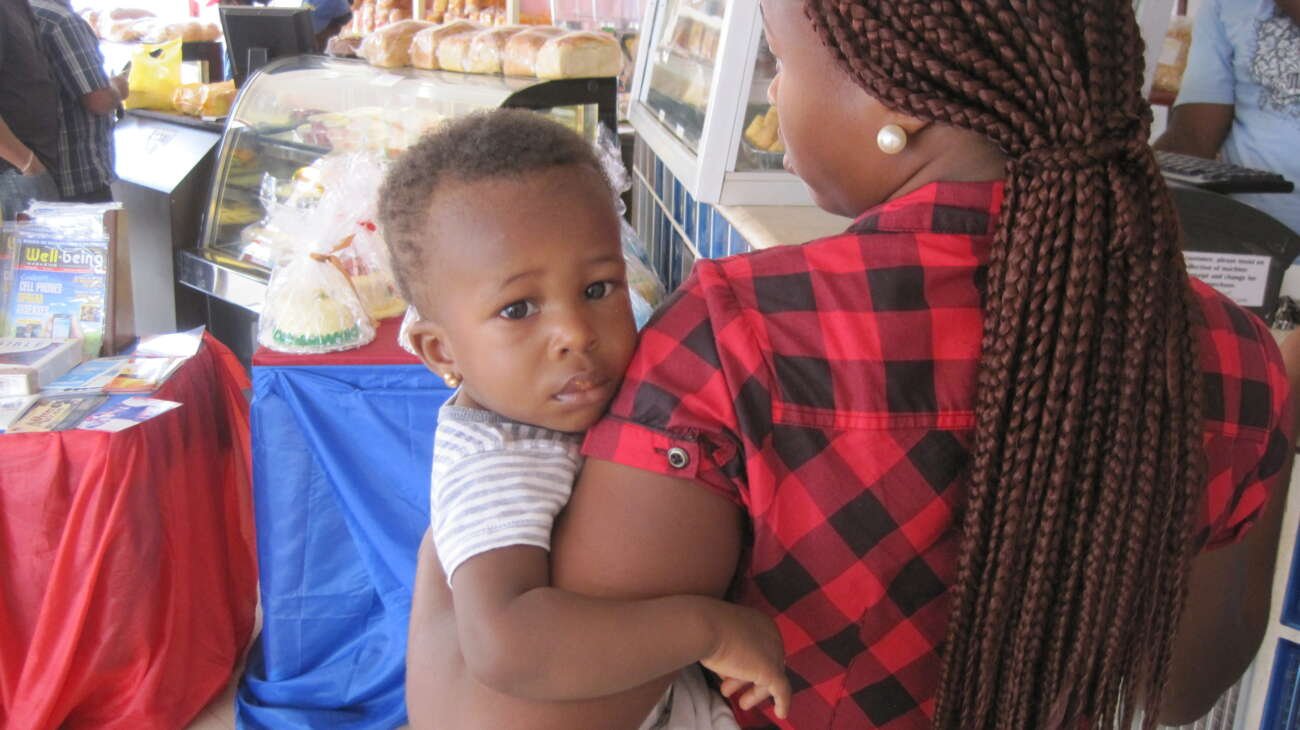

A small child with round cheeks and a crop of tightly curly dark hair whimpers in her mother‘s arms. Only seven days old she is dressed in light colored traditional attire identical to her parents. An elderly man hovers nearby a table elaborately decorated with separate bowls each containing small amounts of water, red pepper, salt, oil, honey, liquor and kola nuts – essential ingredients for the naming ceremony.
The child’s grand parents, uncles, aunts, cousins, in-laws and members of the community all bearing gifts are gathered present. The baby is handed to the elderly man who is to perform the rituals of the ceremony. Water is sprinkled towards the ceiling and some is applied to the baby’s forehead. The elderly man whispers the child’s name into its ear. Dipping the tip of his finger into the water he touches the child’s forehead whilst announcing her name. Lightly dipping his finger into the assorted bowls he slowly introduces a tiny fraction of each ingredient into the baby’s mouth whilst muttering prayers of well wishes. Water symbolizes purity; salt is the flavor of wisdom and kola nuts are symbolic for good fortune. After the various items have been introduced to the child they are passed around for those present to taste then festivities which could last into the early of the next day begin.
This is what is called a traditional baby naming Ceremony, a historical and religious tradition in most parts of Central, Eastern, Southern and Western Africa, and otherwise known in the Western society as a baby christening/called a Naming ceremony is the event which an infant is given a name or names. They can occur anywhere from mere day after birth to several months afterward
Symbolic, lengthy and sometimes lavish ,these ceremonies can differ across the Continent and even among families within the same immediate area, but in most cases elders and ingredients play a significant role in the proceedings.
In the Swahili speaking countries of Tanzania, Kenya, Uganda, Burundi and the Edos of Nigeria, a naming ceremony takes place seven days after a baby’s birth. The Igbo people of Nigeria celebrate naming ceremonies on the twenty-eight day after birth of the child prior to that period the child is known simply as omo ofu (new child) and is a joyous gathering of relatives and friends combining music with much fanfare. At this occasion the family patriarch throws the child into the air and calls out a name. If the crowd accepts the name they will cry out in approval. If not the patriarch tries again until he calls out an acceptable name. During the day’s festivities, the child is passed around to give friends and relatives opportunities to bestow their own pet names on the child. The day that the newborn’s naval cord falls off is the day that a child from several cultures in Zambia receives its name. Traditionally the infant’s maternal grandmother presides over the ceremony. And days??
The Akan people of Ghana and Ivory Coast begin and end their naming ceremony before sunrise on the eight day of birth and the first name bestowed on the child is usually the day of the week on which the he or she was born. The naming ceremonies for Yoruba infants of Nigeria occur shortly after birth due to a superstition that if the child is not named quickly he or she will not live longer than the parent of their gender.
Traditional African names have wonderful meanings and unique histories with the origins of a name tracing back four or more generations and hence naming African families attaché great significance to a name which is why the naming system has been carefully preserved throughout the generations. These ceremonies are fulfilling and meaningful and religious experience and although its tradition is still preserved there are differences. There are certain features which appear rather consistently in one form or another over the continent particularly is this true of the purpose of the formal bestowing of the name. The name conferred on the new born is not merely to distinguish the individual child but – more importantly – to acknowledge and welcome the newcomer as a member of the community, congratulate the parents and make auspicious predictions for the child’s future.
African tradition, childbearing is an essential aspect of every family. Apart from cementing marital bond, the presence of children injects real life into the family.
With a communal gathering celebrate arrival and life of a baby life in and mostly begin at dawn. In Africa the naming of a child is a matter of great importance and a number of considerations are made prior to naming a baby. Was the child born in the morning, in the evening. Is this the parents first child or first female child. Fervent wishes for a long and happy life are made to the child through prayer and introduction of several ingredients shaped by culture
the compleiximties of the rhytms in each ceremonies represent
The relions of the african dispora are differet from each other in that each posses a unique heritage from Africa.
Prayers and blessings are all part of the communal religious experience of chanting A ritual of prayer and greetings followed, name also sometimes reflects the clan, sex and relative position of the baby. Special names are given to first borns, second borns, twins etc
The Yoruba people of Nigeria have a saying: “We consider the state of our affairs before we name a child.” This attitude is general throughout Africa. The arrival if a child is seen with African society as a happy and fortunate occurrence, a landmark b the life of the family and a significant incident in the collective existence of the community. Ceremonies associated with the naming of the child differ from place.
With 54 countries in Africa and a land area three times the size of the United States, African history reached back to the very first days of humankind and Africa is home to moer than one thousand ethnic groups spealomh jundreds pf languages consistening of thousadans of dialects .