


From production companies to restaurants, record labels to clothing lines, celebrity owned businesses are occupying a niche in the marketplace. Many celebrities are no longer content with endorsing products and are opting to launch their own companies. Once a celebrity has reached a certain level of stardom they can utilize their fame and fortune to branch into business. Most tend to start businesses in fields which closely match their line of expertise — rappers opt for clothing lines whilst actors opt for production companies, but a few have taken the road to success through other ventures.
A regular on the television comedy “The Bernie Mac Show,” actress Camille Winbush whose burgeoning list of credits include a lead role in Ghost Dog: The Way of Samurai with Forest Whitaker got her big break playing the niece of comedian Bernie Mac on the hit Fox show. Not content to merely receive a regular income, the teenage actress who comes from a family of entrepreneurs launched an ice cream bakery called Baked Ice in Pasadena 3 years ago.
“I actually got the idea from my parents,” says Winbush. “When I was younger my mum would bake cookies and my dad and I would also put ice-cream with it and being in Southern California I thought ice cream would sell all year round and so I put the two together and came up with Baked Ice as I thought that would be an interesting and profitable business.”
The actress who resides in Pasadena scoured several cities before settling on a convenient location in the historic Old Town section of the city which is littered with restaurants, clubs, theaters and shops. With paychecks netted from a successful acting career and a supporting family unit Winbush opened Baked Ice at age 13 and was guaranteed publicity by press outlets who seized the opportunity to write about the actress’s new venture.
“It took us about 6 months to get everything up and running and we had a big grand opening and that brought in a lot of people. After that things really picked up because people remembered that day and then people were coming in doing interviews about the store and me owning it and it just took off.” With other ice cream and smoothie stores merely a few blocks away, Winbush says the competition didn’t faze her.
“They didn’t quite have the same feel like we did. We had a family feel. Our prices were a lot lower than the competition and the atmosphere we had was very welcoming. When you are here it feels like you are at home which I think helped our business a lot. Because people would come in and would see that it is family owned and see that it’s a very nice and cozy atmosphere and that made people come back and bring more people. Although Baked Ice made a big profit in its first year, Winbush, who is very much involved in running the business admits that it hasn’t always been easy.
“With my schedule when I was working on the show and trying to run the business at the same time it got a bit frustrating that I couldn’t be in one place. It was harder to keep everything together, but luckily I had my family. My aunt was running the shop for me and would call me everyday at work with updates on profits and if we ran out of stuff on my lunch break I would run to Smart & Final and pick up whatever we needed.”
Rewards
With the show being in syndication, things have gotten a lot easier for the actress who has now sold the business and is seeking to open another outlet this fall. “I miss having to go back and forth because it was that added thing that really pushed me to really make sure that everything was perfect. I would like to open a lot of more branches of the shop and have at least 3 or 4 in Los Angles and move out to different states like Chicago and Detroit and turn this into a big corporation,” she states.
The actress who recently graduated from high school credits her celebrity status for the success of her business, but is quick to point out the nuances of being famous can also damage ones business.
“It was easier in a sense for me to have this idea and put it into motion and go as fast as I did. I didn’t have to look for investors and people that would help me out. I had the means to do it myself which is good in a way but sometimes it can be bad for if things didn’t work out the way that it did then I would have been out of my investment money,” she says. “I was able to call the news crews and the newspapers and they were willing to come out and do interviews and run stories on the shop because they knew who I was and that brought a lot of people in also to come in and see me.”
Owing a company like anything has its pros and cons and for Winbush the advantages have been rewarding.
“You get the experience of being independent and running your business and doing what it is that makes you happy which is good in the long run. Not having the time to do everything you would like is the disadvantage. On the weekends I might want to hang out with friends but I had to be in the shop making sure things were running smoothly there. In the long run, it’s a great experience and if you have a little corner stand it’s something and you should do it because the experience will help you out in the long run and you could possibly make a profit.”
[“Supporting minority businesses actually helps the minority’s economy”]
Despite the potential risks and challenges involved in owning a business, actress Tichina Arnold still took a chance in launching her company China Moon Rags 7 years ago. The busy actress who stars on the family sitcom “Everybody Hates Chris” turned a therapeutic hobby into an empire by simply designing customized head bandanas on her dining room table.
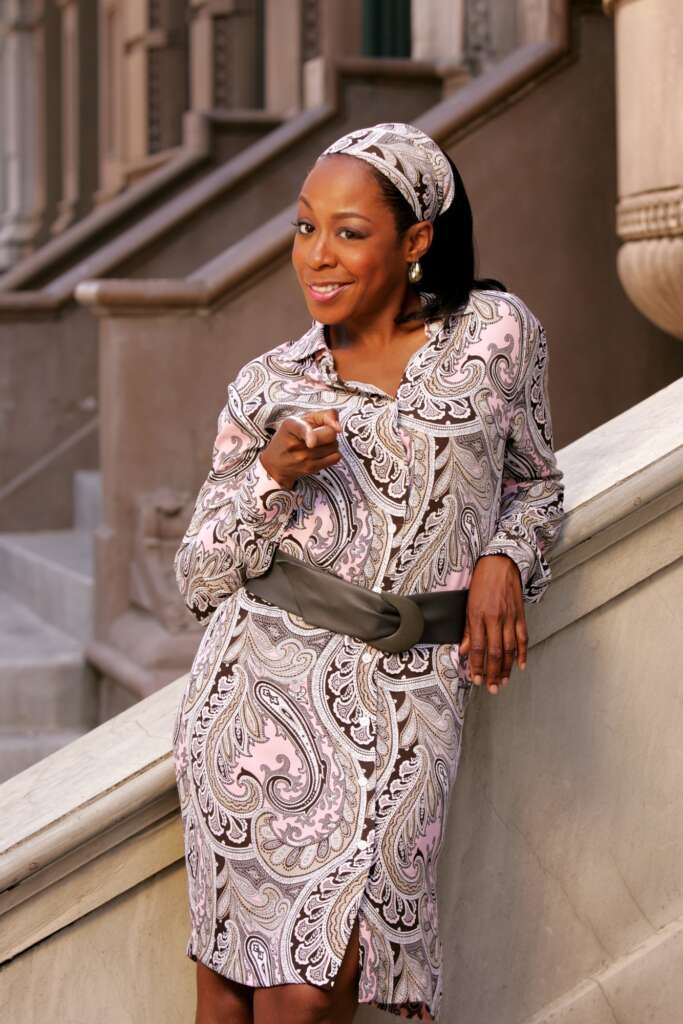
“I really got into business by accident,” she says. “I was dressed up one day and I just didn’t feel like doing my hair and so I said why don’t take some stones and sew rhinestones onto a bandana.”
This was clearly the start for Arnold whose entrepreneurial venture took off with mere self promotion.
“From that moment on I started making them for myself and a lot of my friends are in show business and are celebrities so I started making it for them for different events and red carpets and it got a huge recognition without me even realizing it. Then the NBA called me and so when I got my NBA licensing deal that’s when I knew it was serious.”
Arnold who invested her personal funds into the web based company claims the profits earned from the business kept her afloat for several years between acting gigs and strongly encourages support for minority businesses.
“Supporting minority businesses actually helps the minority’s economy. We always hear about Jews sticking together and Italians sticking together and Irish sticking together and it’s very important that we put into the economy because we are consumers so it’s good to put into something you own that could be a part of your legacy.”
China Moon Rags whose clientele include celebrities Janet Jackson, Christina Aguilera, Jada Pinkett-Smith and Justin Timberlake at one point employed 5 employees and was a fully functional site where customers could order anything from embroidered head scarves to T-shirts at a cost ranging between $8.00 to $500.00 depending on the product, but after giving birth to a daughter 3 years ago she was forced to downsize and with a grueling show taping schedule she admits it’s extremely challenging running a business.
“When I got pregnant things went downhill from there in terms of the business because I wasn’t able to be around much and wasn’t promoting China Moon Rags and the women that I had found other jobs. In turn I downsized and have been doing it on a much smaller scale. The website is still up, but I just closed the store because I am going to revamp the whole look of my company. I like to be very hands on with my business and what I do is very time consuming because I use only Swarovski crystals. I don’t use any plastic stones and I don’t compromise any of the quality of my work so my stuff is a little pricier than what the average person would get off the streets.”
Arnold who was recently in the movie “Wild Hogs” with John Travolta also credits her celebrity status for the success of her company. “In this industry people say any publicity is good publicity. I am my own marketing tool. If I want China Moon Rags to be exposed then I would wear it on the red carpet. I do a lot of giveaways and I do a lot of charity work in which I give away products. There’s always areas to keep the business flowing but right now I am trying to focus on Everybody Hates Chris and when I am down for the season I will definitely have China Moon Rags up and running. With plans of expanding on her successes with a clothing line, Arnold claims she has learned to be a better business woman through the trials and tribulations of running the company.
“The clothing industry is a really tough business and it’s tougher than show business and the apparel industry is all about who you know and how well the dollars make sense. I have learned in this business that nobody is going to give you any information for free. You really have to knock down doors and ask questions and figure it out for yourself and that is what I did with China Moon Rags and the profits have taught me to be a better business woman. Right now it’s a web based business where the average person can call and get customized stuff. I own it and I love it and whether it’s successful or not, it’s still something that’s a wonderful part of my life because I have learned so much doing it. I haven’t set any specific goals for China Moon Rags, but what I have done is put it in a place where it can be anything it wants to be for rags implies anything from scarves to clothing. I don’t want to be another celebrity that has a clothing line and you don’t know the quality of your own clothing for I am a hands on person and I have to be involved and stay involved in my business,” says Arnold.
Whether it’s Beyonce’s House of Deréon, Sean Combs’ Sean John line, Jay-Z’s Rockawear or Jada Pinkett-Smith’s clothing line Maja, celebrities and fashion have always been synonymous and celebrity businesses are proving to be a savvy marketing tool. Although many celebrities are often touted as not being intimately involved with their labels, Kimora Lee Simmons, model and CEO of Baby Phat Fashions (acronymic slang for “pretty hot and tempting”), whose lavish designs are worn and sought by everyone from Paula Abdul to Britney Spears claims otherwise. “I am not a celebrity turned designer and have been in fashion all my life so I am more like a fashion girl turned designer. It’s [Baby Phat] definitely given me a platform to share my love for fashion. My first fashion job was for Channel so fashion has always been for me and my love and interest for fashion would never change.” The model who along with her entrepreneurial ex-husband Russell creates and markets urban hip-hop fashions for men, women, and children under the Phat Farm and Baby Phat names and recently extended the company‘s reach into the Middle East by opening three shops in Dubai and Abu Dhabi.
“It’s much easier for celebrities to own or run business,” says Lisa Humphrey President/CEO of Eternal Concept Public Relations agency.
“They are in the public eye and have resources and are able to build businesses by using their celebrity status and are also able to have silent partners whether it’s friends or family members where they don’t necessarily have to go to the bank and take out a loan so it’s usually within their cycle and they usually will start a business to carry on after their career goes away or doesn’t work out for them.
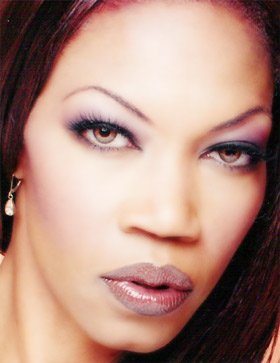
For Mad TV actress Minnie Foxx who has portrayed many characters in movies, television and theatre starting a business was definitely a sideline. Foxx started her company as a back up plan to acting and despite a lucrative career in entertainment, the Ohio native felt she needed to have a separate form of stability in case the acting didn’t work out and with a background in modeling started the Collier Image Studios, an entertainment networking company which also serves as a photographic studio for entertainment professionals. “As an entertainer you have to have a backup plan and I learned the behind the stuff scenes first so when there wasn’t any acting work I would have that other side and that helped me be able to keep the business together and still be in the entertainment field,” says Foxx who started the company in 2005.
Sometimes starting a business is a celebrity’s way of supporting a particular community. Salma Hayek launched her own production company Ventanarosa in 1999 to acquire and develop properties for herself and other growing Latino actors whilst Jennifer Lopez opened restaurant Madre’s in 2002 to celebrate her Latin heritage. The actress-singer-dancer-perfume creator-fashion designer who is of Puerto Rican descent wanted the restaurant to serve Latin food, just like she had when growing up and those who might be doubtful that she is really that involved in this restaurant’s creation are quickly put at ease upon visiting the website, where her name is plastered all over the introductory page.
There’s the assumption that the bigger and more successful a celebrity is, the less chance there is of them being hands-on. “Not so,” says actress Vivica Fox who owns the movie production company Foxy Brown Productions Inc. “I am very hands on from beginning to the end,” claims Fox who started the company in 1996 as a vehicle to also producing her own movies. “I don’t wait for Hollywood to tell me what I am going to do next. Owning your own business is the next chapter of having your career have longevity and the fulfillment that you get from seeing something go from a piece of paper to being an actual product is very rewarding.” The veteran actress who recently participated in the third season of ABC’s Dancing with the Stars is currently producing a sequel to the romantic comedy Two Can Play that Game and will also co-star with actress Jessica Simpson in Major Movie Star, a remake of movie Private Benjamin. Fox, like most celebrities has had her fair share of negative press, but says it has had no detrimental effect` on her business relationships and the advantages of her celebrity status have been far more rewarding.
There may be numerous advantages for celebrity run businesses but there can be huge disadvantages as well. The glitzy Fashion Café which opened to much fanfare in 1995 was a disastrous collaboration between Italian-born restaurateur Tommaso Buti and supermodels Naomi Campbell, Claudia Schiffer, Elle Macpherson, and Christy Turlington. In 1999 Buti was arrested on a variety of criminal charges, including defrauding investors and later resigned from his management role at the model-fronted eatery, leaving the eatery teetering on the edge of bankruptcy. Planet Hollywood, after opening in 1996 with the combined power of investors Sylvester Stallone and Bruce Willis suffered from mediocre food and services and with the actor’s limelight demise filed for bankruptcy in 2001.
“Negative publicity can make or break a celebrity that is starting up,” says Yolanda Woodward Littleton, CEO of Capital Power International, a film financing company. “This can happen if they are not past that 10 year mark. It’s all about the numbers.”
Owning companies give celebrities a new sort of canvas for they can use their businesses to raise their own profiles. Having built thriving enterprises they can capitalize on that success by starting other companies and with a star born every minute there’s no dearth of minority celebrity owned busines
2 Comments
Comments are closed.